
YouTube is no longer just a video platform. In 2026, it is a full-stack media business: a search engine, a social network, a learning management system, a shopping mall, and a talent agency rolled into one. More importantly, it is still one of the few places where a single person with a camera, a clear idea, and consistent effort can build a six or seven-figure income without a traditional gatekeeper.
But the window for random, passion-only content is closing. The creators who win in 2026 are the ones who treat YouTube like a business from day one. That means picking a niche with real demand, stacking multiple income streams, and producing content that people search for, share, and return to. This guide is built for that second group: people who want to turn a channel into a real asset.
We are going to look at ten of the most profitable, trend-aligned YouTube channel ideas for 2026. For each, we cover what it is, why it is trending, how to monetize it, real success stories, who it is best for, and what realistic earnings look like in the first year. We also include a niche selection framework, a revenue stack, and a 24-month growth roadmap at the end.
The YouTube Opportunity in 2026: By the Numbers
Before choosing a niche, it helps to understand the scale of the opportunity. YouTube now has more than 2.7 billion monthly active users, and the average viewer watches more than 45 minutes per day on mobile alone. According to Oxford Economics, YouTube contributed over $35 billion to the United States economy in 2023 through creator earnings, and the global number is far higher. The creator economy as a whole is projected to exceed $500 billion by 2027.
What makes 2026 different from five years ago is the rise of AI-assisted production. Tools like ChatGPT, Claude, ElevenLabs, Descript, Midjourney, and CapCut allow a solo creator to produce what once required a small team. That has lowered the barrier to entry, but it has also raised the quality bar. Viewers can spot low-effort, AI-generated noise instantly. The creators who win are the ones who use AI to move faster while keeping a real human voice.
The YouTube Revenue Stack: Why AdSense Should Be Your Smallest Stream
The biggest mistake new creators make is thinking YouTube AdSense is the business. It is not. AdSense is usually the smallest and most volatile income stream. The real money comes from stacking several monetization methods on top of each other. Think of AdSense as the floor and the other streams as the ceiling.
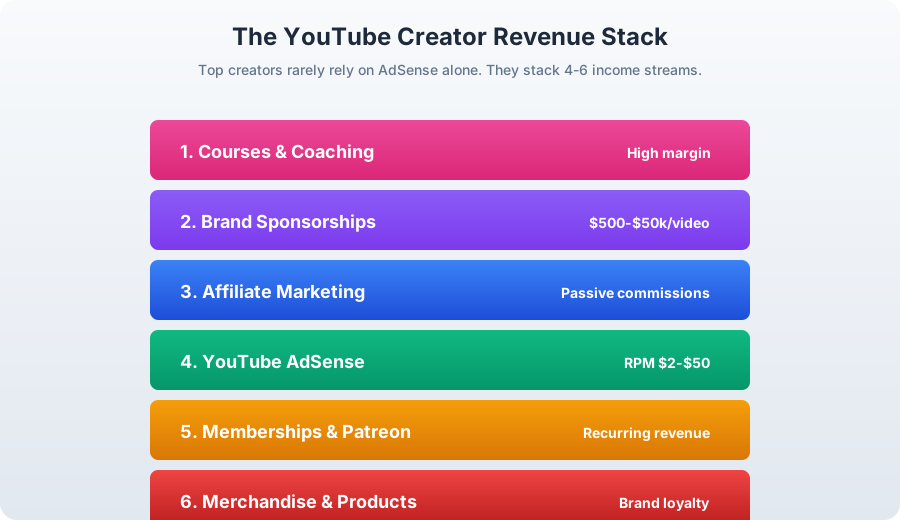
Here is the typical revenue stack for a serious creator in 2026, ranked from highest margin to lowest:
- Courses and coaching: High margin, high control, and scalable. This is where most full-time creators make the majority of their money.
- Brand sponsorships: Rates range from a few hundred dollars for micro creators to $50,000+ per video for large channels in high-value niches.
- Affiliate marketing: Passive commissions from products you already use and recommend. Finance and tech channels can earn $5 to $100+ per conversion.
- YouTube AdSense: RPM (revenue per thousand views) ranges from $2 in entertainment to $50+ in finance, legal, and business niches.
- Channel memberships and Patreon: Recurring revenue from your most loyal fans. Small but predictable.
- Merchandise and products: Best once you have a recognizable brand and a loyal community.
The channels that survive algorithm changes and demonetization scares are the ones with diversified income. Every niche below can be paired with at least three of these revenue streams.
How to Pick a Niche: The Demand-Passion Matrix
The wrong niche will kill a channel before it starts. The right niche makes growth almost automatic. We use a simple 2x2 matrix to evaluate ideas: your passion and expertise on one axis, and market demand on the other.
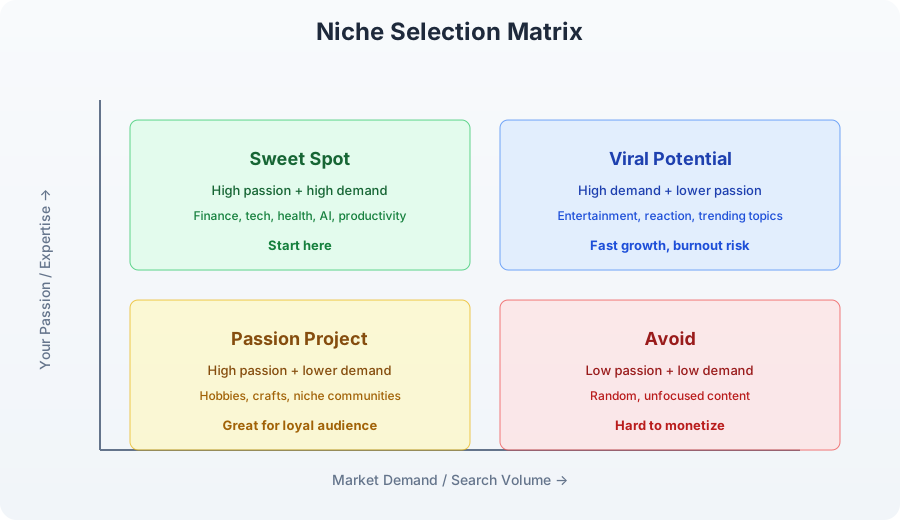
The sweet spot is high passion plus high demand: finance, tech, AI, health, productivity, and online business. These niches have strong search volume, high CPMs, and clear monetization paths. The danger zone is low passion and low demand. Avoid random vlogs with no clear promise unless you are already famous.
Top 10 YouTube Channel Ideas That Make Money in 2026
1. AI Tool Reviews and Tutorials
AI is the biggest technology shift since the smartphone, and most people are overwhelmed by it. They want someone to test tools, compare them, and show them how to use them. An AI tool review channel fills that gap perfectly.
Why it is trending: New AI products launch every week. The keyword "how to use ChatGPT" has been searched millions of times, and related searches for Midjourney, ElevenLabs, Runway, Jasper, Claude, and Perplexity are all growing. Early movers in this niche are becoming the default reviewers for specific tools.
Monetization: Affiliate commissions are the strongest here. Many AI tools pay 20% to 50% recurring commissions. Sponsorships from AI companies are also common once you hit 10,000 subscribers. You can also sell prompt packs, courses, and newsletter subscriptions.
Real success story: Matt Wolfe built a channel around AI tools, tutorials, and future tech. He combined fast reviews with honest testing and grew quickly by ranking for specific tool names. His income comes from a mix of sponsorships, affiliate links, and his own digital products.
Use cases: Best for tech-savvy creators who enjoy testing software, writing scripts, and breaking down complex features for beginners.
Expectations: First 90 days, focus on publishing 20 to 30 tool-specific videos. Affiliate revenue can start within 3 to 6 months. By month 12, a focused AI review channel with 50,000 monthly views can realistically earn $2,000 to $8,000 per month through affiliate and sponsorships, far more than AdSense.
First steps
- Pick 3 to 5 AI categories to own: writing, image generation, video, voice, coding.
- Create comparison videos: "ChatGPT vs. Claude for X," "Best AI tools for Y."
- Sign up for affiliate programs before you publish, so links are ready.
- Build a simple website or newsletter to capture email addresses.
2. Personal Finance, Investing, and Wealth Building
Finance is one of the highest-CPM niches on YouTube. Advertisers in banking, investing, insurance, and real estate pay premium rates because a single customer is worth thousands of dollars. That makes it incredibly profitable even with modest views.
Why it is trending: Economic uncertainty, inflation, and the rise of retail investing have created a huge audience of people trying to understand money. Gen Z and millennials are especially interested in side hustles, passive income, investing, and credit optimization.
Monetization: AdSense RPMs of $15 to $50 are common. Affiliate links for brokerage accounts, robo-advisors, credit cards, and insurance pay $25 to $200+ per qualified sign-up. Courses on budgeting, investing, or real estate can sell for $100 to $1,000. Coaching adds another high-ticket layer.
Real success story: Graham Stephan started by sharing his experience as a real estate agent and saver. His channel now has more than 4 million subscribers and multiple income streams: AdSense, affiliate marketing, real estate commissions, and courses. He is one of the clearest examples of turning a finance channel into a multi-million-dollar brand.
Use cases: Ideal for people with a finance, accounting, or real estate background, or anyone who has genuinely built wealth and can document the journey.
Expectations: Finance is competitive, so authority matters. Plan for 6 to 12 months of consistent publishing before significant monetization. A channel with 100,000 monthly views in finance can earn $5,000 to $20,000 per month through the full stack.
First steps
- Pick a sub-niche: saving, investing, real estate, credit, or side hustles.
- Use real numbers and personal stories. Trust is everything in finance.
- Disclose all affiliate relationships clearly.
- Apply for YouTube Partner Program and brand affiliate programs as soon as eligible.
3. Faceless YouTube Automation Channels
Faceless channels use stock footage, AI voiceovers, animation, and scripted narration instead of an on-camera host. They can cover motivation, finance, history, true crime, top 10 lists, and educational topics. The model is attractive because it can be scaled and even outsourced.
Why it is trending: AI tools have made production cheaper and faster. A single creator can now run several faceless channels. Niches like "wealth motivation," "AI explained," "history mini-documentaries," and "strange facts" are pulling millions of views.
Monetization: AdSense is the main driver, but the best operators also use affiliate links, sponsorships, and eventually sell the channels. Some faceless channels are flipped for 20 to 50 times their monthly revenue.
Real success story: Many anonymous creators in the "future business" and "money motivation" niches have built channels with millions of subscribers. The key is consistency and a recognizable format. For example, a channel like "MagnatesMedia" built a large audience through mini-documentaries and now monetizes through sponsorships and its own products.
Use cases: Great for introverts, writers, or teams who want to scale multiple channels without being the face of every brand. It is also good for people with strong research and scriptwriting skills.
Expectations: Faceless is a volume game. Channels often take 6 to 12 months and 50 to 100 videos to gain traction. The risk is higher because the personal connection is lower. Realistic earnings for a successful faceless channel with 500,000 monthly views: $1,500 to $5,000 from AdSense, plus affiliate revenue.
First steps
- Pick a high-retention format: top 10 lists, mini-documentaries, or explained videos.
- Invest in a unique voiceover style and strong thumbnail design.
- Use tools like ElevenLabs, Midjourney, and CapCut for production.
- Focus on evergreen and searchable topics, not just trends.
4. Health, Longevity, and Biohacking
Health content has exploded, especially around longevity, biohacking, mental performance, sleep, and nutrition. Audiences are willing to spend heavily on supplements, devices, courses, and coaching to feel better and live longer.
Why it is trending: Aging populations, wearable devices, and popular figures like Dr. Peter Attia, Dr. Andrew Huberman, and Dr. Sten Ekberg have normalized scientific health content. People want evidence-based advice, not miracle cures.
Monetization: High CPMs from health advertisers, affiliate sales for supplements and wearables, sponsorships from health brands, and high-ticket coaching. Some creators also launch their own supplement or product lines.
Real success story: Huberman Lab grew into one of the largest science podcasts partly through YouTube. While not purely a YouTube-native channel, it demonstrates the appetite for long-form, evidence-based health content. Smaller creators in the longevity and metabolic health space have built six-figure businesses with far fewer subscribers by selling coaching and affiliate products.
Use cases: Best for medical professionals, nutritionists, fitness coaches, biohackers, or anyone who reads and summarizes scientific research well. Credibility matters more than charisma here.
Expectations: This niche requires careful fact-checking and compliance. Growth can be slow because trust takes time, but the audience is loyal. A health channel with 50,000 monthly views can earn $3,000 to $10,000 per month when affiliate and sponsorships are included.
First steps
- Choose a focused sub-niche: sleep, hormones, metabolism, fitness, or mental performance.
- Cite peer-reviewed studies and avoid medical claims.
- Build an email list before promoting products.
- Get credentials or partner with experts to build authority.
5. Sustainable Living, Tiny Homes, and Van Life
This niche is visual, aspirational, and highly shareable. It attracts a loyal audience of people interested in minimalism, off-grid living, travel, and environmental responsibility.
Why it is trending: Housing costs, climate awareness, and the desire for freedom have pushed more people to explore alternative lifestyles. Tiny homes, van conversions, and off-grid cabins are consistently popular search topics.
Monetization: Brand deals with solar companies, insulation brands, appliance makers, and travel gear companies. Affiliate links for products used in builds. Courses on how to build a tiny home or convert a van. Patreon for extended vlogs. Some creators sell their own plans or merchandise.
Real success story: The channel "Living Big In A Tiny House" by Bryce Langston has millions of subscribers and has inspired a global tiny home movement. He monetizes through sponsorships, a Patreon community, and affiliate links. Similarly, van-life creators like Kara and Nate have turned travel documentaries into a full business with courses and brand partnerships.
Use cases: Perfect for builders, travelers, minimalist lifestyle enthusiasts, or anyone documenting a real lifestyle transformation.
Expectations: Visual quality matters. A cinematic channel with consistent uploads can grow quickly because the content is highly shareable. Realistic earnings for a 100,000 monthly-view channel: $2,000 to $7,000 from AdSense, plus sponsored build projects that can pay $5,000 to $50,000 each.
First steps
- Document a real project: a van build, tiny home, or sustainable renovation.
- Focus on the transformation and the emotional story, not just the technical details.
- Partner with product brands early for free materials and sponsored segments.
- Create a series so viewers subscribe to follow the journey.
6. Remote Work and Digital Nomad Lifestyle
Remote work is now permanent for millions of people, and the digital nomad lifestyle has moved from fringe to mainstream. People want practical advice on visas, taxes, gear, productivity, and destination reviews.
Why it is trending: Companies are accepting distributed teams, and countries are launching digital nomad visas. Post-pandemic, more professionals want to travel while working. This creates demand for guides, gear reviews, and community content.
Monetization: Affiliate links for travel gear, VPNs, travel insurance, banking services, and accommodation booking platforms. Sponsored destination content. Courses on how to become a digital nomad. Coaching for freelancers. A paid community or Patreon.
Real success story: Sorelle Amore built a channel around travel, self-improvement, and alternative living. She monetized through courses, affiliate marketing, and brand deals. In the business-nomad space, creators like Nomad Capitalist have built multi-million-dollar businesses around tax optimization and global living.
Use cases: Great for remote workers, freelancers, travelers, and people genuinely living the lifestyle. Authenticity is the main differentiator.
Expectations: This niche benefits from a personal brand. Travel content can be expensive to produce, so start locally or regionally. A channel with 80,000 monthly views can earn $2,000 to $6,000 from AdSense and affiliate links, with sponsored travel adding more.
First steps
- Choose a focus: destination guides, gear, visas, or remote work tips.
- Document real trips and real costs. Viewers value honesty.
- Build a newsletter or community for nomads.
- Apply to affiliate programs for travel gear and booking sites.
7. Niche Cooking, Meal Prep, and Cultural Recipes
Food content is one of YouTube's biggest categories, but the most profitable creators are not making generic recipes. They own a specific angle: meal prep for busy parents, keto desserts, regional Indian cooking, high-protein bodybuilding meals, or budget cooking.
Why it is trending: People cook more at home and search for specific recipes. Shorts are particularly powerful here because a 60-second recipe demo can drive millions of views and channel subscriptions. Niche angles help a creator stand out in a crowded space.
Monetization: Cookbooks, branded kitchen products, sponsored ingredients, affiliate links for cookware, YouTube AdSense, and channel memberships with exclusive recipes. Some creators launch their own food product lines.
Real success story: Joshua Weissman built a channel focused on ambitious home cooking with a strong comedic voice. He has published cookbooks, launched products, and worked with major food brands. Maangchi became the leading authority on Korean home cooking, with multiple cookbooks and a loyal global community.
Use cases: Best for home cooks, professional chefs, food photographers, and anyone with a clear culinary point of view. A strong personality helps a lot in this niche.
Expectations: Food channels can grow fast on Shorts. A well-optimized channel with 150,000 monthly views can earn $1,500 to $5,000 from AdSense, plus affiliate and cookbook revenue. The big money comes from launching your own products.
First steps
- Pick a specific angle: budget, health, culture, cuisine, or dietary restriction.
- Invest in good lighting and close-up shots.
- Publish both long recipes and 60-second Shorts.
- Build a recipe index on a simple website for search traffic.
8. Productivity, Skill Acceleration, and Online Learning
People want to learn faster. They want to know which apps, methods, and systems actually work. Productivity and skill channels help them save time, earn more, and stay organized.
Why it is trending: The economy is competitive, and people are looking for any edge. Remote workers, students, entrepreneurs, and professionals all want to improve their systems. AI has added a new layer: how to use AI to 10x productivity.
Monetization: Courses, templates, Notion dashboards, affiliate links for productivity apps, sponsorships from software companies, and coaching. This niche has some of the highest margins because digital products cost almost nothing to deliver.
Real success story: Ali Abdaal started as a medical student sharing study tips and tech reviews. He grew to over 5 million subscribers and built a multi-million-dollar business through courses, affiliate marketing, sponsorships, and his own creator education programs. Thomas Frank is another example, selling productivity templates and courses to a large audience.
Use cases: Ideal for teachers, students, professionals, and anyone who has genuinely improved their own productivity and wants to teach others.
Expectations: Productivity is a trust-based niche. Viewers buy from people who have clearly applied what they teach. A channel with 100,000 monthly views can earn $5,000 to $20,000 per month through the full stack, with courses being the largest component.
First steps
- Pick a learning promise: "Learn X in 30 days," "The only productivity system you need."
- Review apps and tools with honest pros and cons.
- Build simple templates or cheat sheets to give away for email signups.
- Create a course once you have 1,000 true fans.
9. Restoration, DIY, Repair, and Maker Content
Restoration and DIY videos are some of the most satisfying content on the internet. They combine storytelling, craftsmanship, and transformation. The audience is global and highly engaged.
Why it is trending: Right-to-repair movements, sustainability, and the desire to learn practical skills have revived interest in fixing things. There is also an endless supply of broken objects to restore, from antique tools to electronics and furniture.
Monetization: AdSense from long watch times, sponsorships from tool companies, affiliate links for tools and materials, merchandise, and courses on specific skills. Some creators sell the restored items themselves.
Real success story: "TysyTube Restoration" has millions of subscribers restoring old tools and objects. The format is simple: find a rusty item, restore it, show the satisfying before and after. DIY Perks builds custom tech projects and earns through sponsorships and affiliate links. The maker channel "Stuff Made Here" attracted millions with ambitious engineering builds and now partners with major brands.
Use cases: Best for people with workshop skills, patience, and a good eye for storytelling. You do not need to be an expert on camera, but the process must be clear.
Expectations: This niche has strong evergreen potential. A restoration channel with 200,000 monthly views can earn $2,000 to $8,000 from AdSense, with tool sponsorships adding significant income. The biggest channels also get free tools and paid brand integrations.
First steps
- Pick a category: tools, electronics, furniture, cars, or antiques.
- Film the entire process, including failures. Authenticity wins.
- Invest in good macro shots for satisfying detail.
- Build a relationship with tool brands for sponsorships and free gear.
10. Kids and Family Edutainment
This is one of the largest and most consistent categories on YouTube. Parents want safe, educational, and entertaining content for their children. Done well, this niche can attract billions of views.
Why it is trending: YouTube is often used as a digital babysitter and learning tool. Parents actively search for educational songs, stories, science for kids, and read-alouds. The audience may be kids, but the customers are parents and schools.
Monetization: AdSense, brand deals with toy and educational companies, merchandise, music streaming, apps, books, and live events. Channels like Ms. Rachel and Cocomelon have built entire media empires from this starting point.
Real success story: Ms. Rachel created simple, speech-therapy-inspired videos for toddlers and quickly grew to tens of millions of subscribers. Blippi built a character-driven educational channel and expanded into merchandise, live shows, and a streaming deal. Cocomelon, with billions of views, is now a Netflix and merchandising powerhouse.
Use cases: Best for educators, parents, musicians, animators, and performers who can create child-safe, repetitive, and educational content. This requires careful content moderation and COPPA compliance.
Expectations: Kids content can scale fast, but it is highly competitive and regulated. A successful channel with 500,000 monthly views can earn $1,500 to $5,000 from AdSense, with the largest revenue coming from merchandise and licensing.
First steps
- Choose a format: songs, stories, science explainers, or read-alouds.
- Keep content safe, positive, and educational.
- Use repetition and bright visuals. Young viewers love predictability.
- Build a brand character or mascot early.
Quick Comparison: All 10 Ideas at a Glance
| Niche | Difficulty | CPM Range | Best Income Streams | Time to First Dollar |
|---|---|---|---|---|
| AI Tool Reviews | Medium | $8-$25 | Affiliate, sponsorships, courses | 3-6 months |
| Personal Finance | High | $15-$50 | AdSense, affiliate, courses | 6-12 months |
| Faceless Automation | Medium | $3-$10 | AdSense, affiliate, channel sales | 6-12 months |
| Health & Longevity | High | $10-$35 | AdSense, affiliate, coaching | 6-12 months |
| Sustainable / Tiny Homes | Medium | $5-$15 | Sponsorships, affiliate, products | 3-9 months |
| Remote Work / Nomad | Medium | $6-$20 | Affiliate, sponsorships, courses | 6-12 months |
| Niche Cooking | Medium | $4-$15 | Products, cookbooks, AdSense | 3-6 months |
| Productivity / Learning | Medium | $8-$25 | Courses, templates, affiliate | 3-6 months |
| Restoration / DIY | Medium | $4-$12 | AdSense, sponsorships, affiliate | 6-12 months |
| Kids Edutainment | High | $2-$8 | AdSense, merchandise, licensing | 6-18 months |
The 24-Month Roadmap: What to Expect
Most creators quit because their expectations are wrong. Growth is usually slow for 6 to 12 months, then accelerates. Here is a realistic timeline.
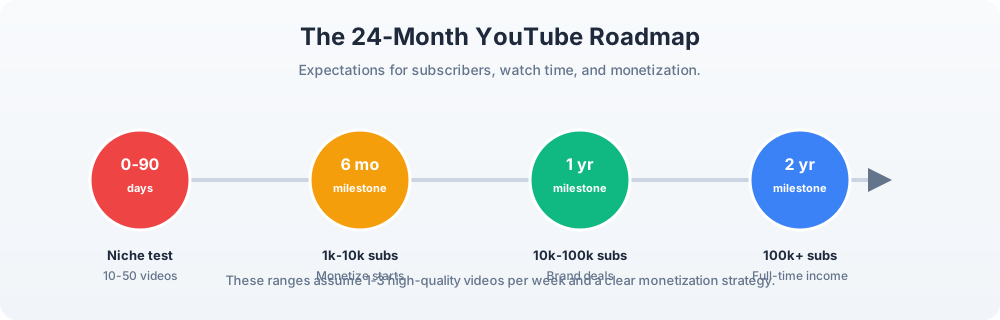
Months 0 to 3 — Niche test: Publish 20 to 30 videos. Focus on learning what your audience wants. Do not expect much money. The goal is data, not dollars.
Months 3 to 6 — Optimization: Double down on the top 20% of content. Improve thumbnails, titles, and retention. Apply for monetization once you hit 1,000 subscribers and 4,000 watch hours, or 10 million Shorts views.
Months 6 to 12 — Monetization: You should now have 5,000 to 50,000 subscribers depending on the niche. Add affiliate links, build an email list, and look for small sponsorships. This is when AdSense starts to matter.
Months 12 to 24 — Scale: With 50,000 to 200,000 subscribers, you can launch courses, products, or a paid community. Brand deals become meaningful. The channel becomes a real business.
Common Mistakes That Kill New Channels
- Chasing trends only. Trending topics bring short-term views but not subscribers. Evergreen search content builds a stable audience.
- Ignoring thumbnails and titles. The best video in the world will fail with a bad thumbnail. Spend as much time on packaging as on content.
- Talking to everyone. A channel for everyone is a channel for no one. Pick a clear audience and solve their specific problem.
- Waiting for perfect gear. A phone and good lighting are enough to start. Content quality matters more than camera quality.
- Relying only on AdSense. AdSense is a bonus, not a business model. Build your revenue stack from the first month.
- Inconsistency. YouTube rewards predictable publishing. A weekly video for a year beats a daily video for a month followed by three months off.
Recommended Tools and Tech Stack
You do not need expensive tools to start, but the right stack saves hours. Here is a practical setup for 2026:
- Scripting and ideas: ChatGPT or Claude for outlines, Notion for content calendar, VidIQ or TubeBuddy for keyword research.
- Filming: Smartphone with a tripod, ring light, and a lapel mic. Upgrade to a mirrorless camera only after monetization.
- Editing: CapCut, DaVinci Resolve, or Final Cut Pro. Descript is excellent for editing talking-head videos by transcript.
- Thumbnails: Canva or Photoshop. A/B test thumbnails with Thumbnail Test.
- Audio: ElevenLabs or Descript Overdub for voiceovers. A Rode or DJI mic for on-camera audio.
- Hosting and products: Use YouTube for discovery, a simple website for SEO, and a tool like Gumroad, Teachable, or Shopify for products.
Real Success Story: The Compound Creator
How a solo creator turned a productivity channel into a seven-figure business
A former project manager started a channel sharing Notion templates and productivity experiments. For the first 6 months, he earned less than $500 per month from AdSense. But he kept publishing, built an email list, and released a paid Notion template bundle. By month 18, the bundle had generated more than $200,000. By month 24, he added a course and coaching. The channel now earns more than $40,000 per month, with AdSense making up less than 10% of revenue.
The lesson: Small audiences in high-value niches can be incredibly profitable if you give them products and services they already want.
References and Further Reading
- YouTube Official Blog and Creator Insider. (2024-2025). Updates on YouTube Partner Program, Shorts monetization, and creator economy initiatives. YouTube Creator Academy.
- Oxford Economics. (2023). The YouTube Effect: The Economic, Cultural, and Educational Value of YouTube in the United States. Commissioned by Google.
- Pew Research Center. (2024). Online Video and Platform Use in the United States. Provides data on viewer behavior and platform trends.
- Statista. (2025). YouTube: Statistics & Facts. Monthly active users, revenue, and creator economy data.
- Social Blade. (2025). Public creator statistics and growth benchmarks. Used for channel estimates and trend analysis.
- Eves, D. (2021). The YouTube Formula: Why Anyone Can Unlock Their Algorithm, Drive Massive Views, and Build a Loyal Following. Mango Publishing.
- SignalFire. (2024). The Creator Economy: A Market Map and State of the Industry. Venture capital and creator economy analysis.
- CB Insights. (2024). The Creator Economy Report. Trends in creator platforms, monetization, and tooling.
- Nielsen. (2024). Total Audience Report. Reach and time spent on streaming and online video platforms.
- Guillebeau, C. (2012). The $100 Startup: Reinvent the Way You Make a Living, Do What You Love, and Create a New Future. Crown Business. A foundational book on turning a small idea into income.
Conclusion: Choose One Idea and Start Ugly
The perfect channel idea does not exist. The best idea is the one you are willing to work on for two years. Pick a niche from this list that matches your skills and a real market demand, publish your first 20 videos, and use the data to refine. Do not worry about looking professional on day one. Worry about being helpful, consistent, and clear.
YouTube rewards persistence. The creators you admire did not start with perfect equipment or viral videos. They started with an idea, a camera, and a publishing schedule. By month 12, the quality gap between you and a million-subscriber creator is mostly just volume and iteration. So choose your niche, build your revenue stack, and upload the first video this week. Your future audience is already searching for it.
Your action plan for this week
Pick one niche from this list. Write down 20 video ideas. Set a publishing schedule of one video per week for the next 90 days. Sign up for three affiliate programs in your niche. And create a simple free lead magnet, such as a checklist or template, to build your email list from the first video. The creators who win are not the most talented; they are the most consistent.